
Disclosure: This article contains an affiliate link. If you purchase through the link, we may earn a commission at no additional cost to you. Our goal is to provide useful information to help you make an informed decision.
Table of contents
Introduction to ZeroWattic Power Saver
For many American households, electricity is one of the biggest recurring bills. Air conditioning in summer, heating in winter, refrigerators that never switch off, and dozens of chargers and smart devices all contribute. According to the U.S. Energy Information Administration, space cooling, space heating, water heating, lighting, and refrigeration are among the largest end uses of electricity in US homes. So it's no surprise that homeowners and renters look for simple ways to reduce electricity consumption.
ZeroWattic Power Saver is one of several plug-in products marketed as an electricity-saving device for the home. Products like this are easy to buy and appealing, because the promise is simple: plug it in and use less power. The harder question is whether the evidence supports that promise.
In this ZeroWattic Power Saver review, you'll learn:
- What the product is and which details we could and could not confirm
- The basic science of real power, reactive power, and power factor, in plain language
- What to look for in ZeroWattic Power Saver reviews and test reports
- A checklist for deciding whether it's worth buying
- Proven, low-risk ways to cut your home energy use, with or without any gadget
What Is ZeroWattic Power Saver?
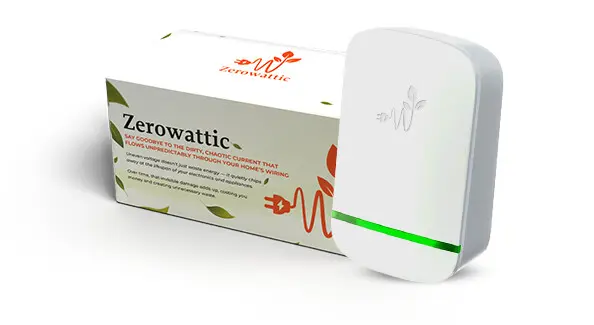
ZeroWattic Power Saver is sold online as a compact device that plugs into a standard wall outlet and is promoted as a power saver for home use. It is sold through an online ordering page reached via the link on this site.
When we reviewed the seller's ordering page in October 2026, it loaded as a checkout flow and did not present a technical specification sheet we could verify. For that reason, we separate what we know from what is claimed:
| Topic | What we could confirm | Status |
|---|---|---|
| Product type | Marketed as a plug-in household electricity-saving device | Marketing description |
| Where it's sold | Online, via the seller's ordering page | Confirmed |
| Voltage, wattage & plug type | Not published on the page we reviewed | Confirm with seller |
| Safety listing (UL / ETL / CSA) | Not shown on the page we reviewed | Confirm with seller |
| Energy savings | No independent test results found | Unverified claim |
| Price, guarantee & returns | Shown by the seller at checkout and may change | Check current terms |
If the seller updates its page with specifications or test data, those details should take priority over anything summarized here.
How Does ZeroWattic Power Saver Work?
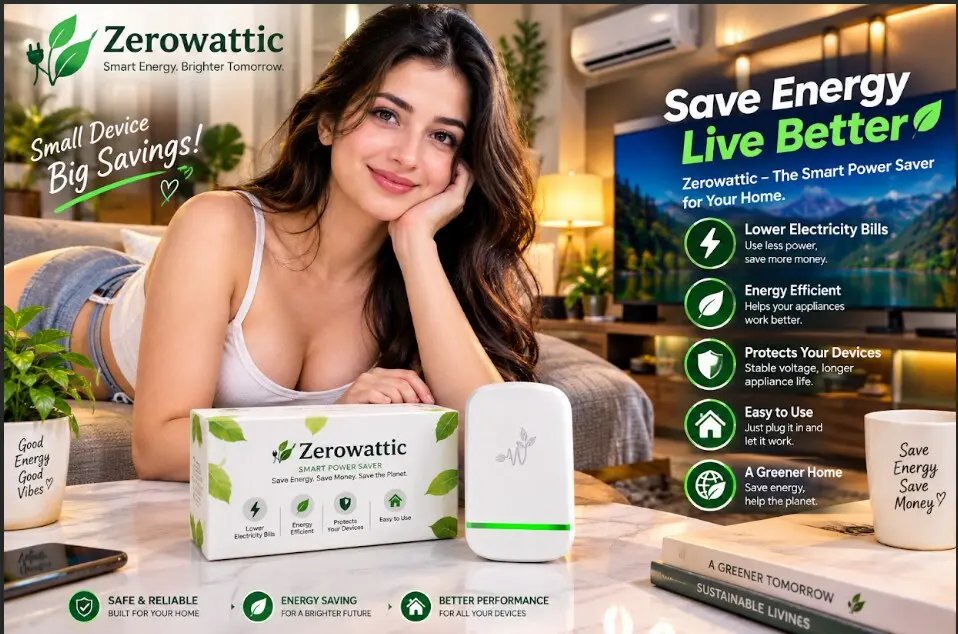
We did not find a detailed, manufacturer-published technical explanation of how ZeroWattic Power Saver operates. Plug-in power savers as a category are often marketed as "stabilizing current" or "improving power factor," commonly using capacitors. Since the seller's specific claims weren't available to verify, it's worth knowing the basic concepts so you can evaluate any claim you read.
Real power, reactive power, and power factor
- Real power (measured in watts, W) is the energy that actually does work: running a compressor, heating water, lighting a bulb.
- Reactive power (measured in volt-amperes reactive, VAR) moves back and forth between the grid and devices with motors or coils. It doesn't do useful work at your appliance, but it uses capacity in the wiring.
- Power factor is the ratio of real power to total (apparent) power. A power factor of 1.0 means all the current is doing useful work.
Capacitors can offset some reactive power, which can improve power factor. That's genuinely useful in some large commercial and industrial facilities, where utilities may charge for demand or poor power factor.
The key point for homeowners: Most US residential customers are billed for kilowatt-hours (kWh) of real energy, not reactive power. Improving power factor does not necessarily reduce the kilowatt-hours your meter records, so a better power factor does not automatically mean a lower bill.
Any small reduction in wiring losses inside a home is typically tiny compared with the energy used by the appliances themselves. That's why independent measurement, not marketing language, is the only way to know what a specific device does.
ZeroWattic Power Saver Features
Below is a summary of what buyers can reasonably expect, along with clearly labeled items that still need confirmation. We have not listed features that we couldn't verify as facts.
Plug-in design
Marketed as a device that plugs directly into a wall outlet, with no wiring changes described.
Marketing descriptionElectrical ratings
Voltage, current, and wattage ratings were not published on the page we reviewed. US outlets are typically 120 V, so confirm compatibility.
Confirm with sellerSafety certification
Look for a listing mark from a recognized lab such as UL, ETL (Intertek), or CSA on the device and packaging.
Confirm with sellerEnergy-saving performance
No published independent measurements were found showing a change in household kWh use.
Unverified claimPotential Benefits and Limitations
Potential benefits
- Convenience: A plug-in product requires no tools or installation, which makes it easy to try.
- A prompt to pay attention: Buying any energy product often leads people to look at their bills more closely, which can encourage useful habits.
Limitations and open questions
- Electricity savings have not been established. We found no credible, independent test results for this product.
- Power factor isn't the same as energy. As explained above, residential bills are generally based on real energy (kWh).
- Specifications were not available on the page we reviewed, making it hard to judge safety and compatibility.
- Results can't be checked by feel. Measuring a real effect requires before-and-after kWh comparisons under similar conditions.
Want to read the seller's current product details, terms, and return policy for yourself?
Shop Now – Check Official Offer (opens in a new tab)Affiliate link. Opens the seller's site in a new tab.
ZeroWattic Power Saver Reviews
We have not tested ZeroWattic Power Saver ourselves and don't publish customer testimonials or star ratings for it. Instead, here's how to read ZeroWattic Power Saver reviews you find elsewhere with a critical eye:
- Verified purchases: Prefer reviews on platforms that mark verified buyers, and be cautious of pages where every review is glowing.
- Measured data: The most useful reviews compare kWh readings from a utility bill, smart meter, or plug-in energy monitor before and after use, over comparable weeks and weather.
- Controlled conditions: A lower bill after a mild month, a vacation, or a new appliance doesn't prove that a device caused the change.
- Independent sources: Look for testing by engineers, consumer organizations, or accredited labs rather than the seller's own pages.
- Disclosures: Under FTC guidance, reviewers who are paid or receive free products should disclose that relationship, as we do on this page.
Pros and Cons
Pros
- Simple plug-in format with no installation described
- Ordered online, with terms shown by the seller at checkout
- May encourage more attention to household energy use
Cons
- No independent test results found for energy savings (unverified)
- Technical specifications not published on the page we reviewed (unconfirmed)
- Safety listing not shown on the page we reviewed (unconfirmed)
- Power factor improvement doesn't necessarily lower residential kWh billing
Is ZeroWattic Power Saver Worth Buying?
That depends on what you expect from it and what the seller can document. We can't promise it will reduce your electricity bill. Before ordering, work through this checklist:
- Total price: Note the full cost including shipping, taxes, and any multi-unit bundles, and watch for recurring charges.
- Safety information: Ask whether the device is listed by a Nationally Recognized Testing Laboratory (NRTL) such as UL, ETL, or CSA, and what its electrical ratings are.
- Independent test results: Ask the seller for third-party measurements of kWh use, not just power factor readings or meter screenshots.
- Return policy: Read the refund window, who pays return shipping, and how to contact customer support.
- Realistic savings: Compare the cost to proven upgrades. A few LED bulbs or a smart power strip may deliver measurable savings for a similar price.
If you decide to try it, record your utility's daily kWh data for a few weeks first. That gives you your own before-and-after comparison within the return window.
Practical Tips to Reduce Electricity Consumption
Whatever you decide about any single product, these well-documented steps can improve home energy efficiency. The U.S. Department of Energy's Energy Saver program has more detail on each.

Switch to LED lighting
LED bulbs use far less energy than incandescent bulbs and last much longer. Start with the lights you use most.
Choose efficient appliances
When replacing a refrigerator, washer, or air conditioner, look for ENERGY STAR certified products.
Adjust heating and cooling settings
Small thermostat adjustments while you're asleep or away add up. A smart thermostat can automate schedules, and regular filter changes keep systems running efficiently.
Improve insulation and air sealing
Sealing gaps around doors, windows, and attic openings, and adding insulation where needed, reduces how hard heating and cooling equipment works.
Cut standby power
TVs, game consoles, and chargers can draw power even when "off." Use switchable or smart power strips to shut them off fully.
Monitor household energy use
Check your utility's online usage data, or use a plug-in energy monitor to find which devices use the most. Measuring is the best way to know what actually works.
Where to Buy ZeroWattic Power Saver
ZeroWattic Power Saver is sold online. Use the ordering link below to review the seller's current offer, product details, and applicable terms, including pricing, shipping, and the return policy. We don't set prices or handle orders, so check those details directly with the seller before you buy.
Affiliate link. Opens the seller's site in a new tab.
Frequently Asked Questions
What is ZeroWattic Power Saver?
ZeroWattic Power Saver is a plug-in device marketed to households as a way to improve home energy efficiency. Detailed technical specifications were not published on the seller's ordering page we reviewed, so buyers should request them from the seller before purchasing.
Does ZeroWattic Power Saver really work?
We could not find credible, independent laboratory test results showing how ZeroWattic Power Saver affects household electricity use. Until such results are available, its effectiveness has not been established.
Can ZeroWattic Power Saver lower electricity bills?
Lower bills have not been demonstrated by independent testing. Most US residential customers are billed for kilowatt-hours of real energy, and improving power factor does not necessarily reduce the kilowatt-hours a home meter records.
Is ZeroWattic Power Saver suitable for every home?
Not necessarily. Homes differ in wiring, voltage, appliances, and utility billing. Confirm the device's voltage rating, plug type, and safety certification with the seller, and consult a licensed electrician if you have concerns about your home's electrical system.
What should I check before buying ZeroWattic Power Saver?
Check the total price including shipping, a safety listing from a recognized testing laboratory such as UL, ETL, or CSA, the published specifications, any independent test results, and the seller's return policy and contact details.
How can I reduce electricity consumption at home?
Proven steps include switching to LED lighting, choosing ENERGY STAR certified appliances, adjusting thermostat settings, improving insulation and air sealing, cutting standby power with switchable power strips, and tracking usage with your utility's data or a home energy monitor.
Final Verdict
ZeroWattic Power Saver is easy to understand as a concept: a plug-in product marketed to help households use electricity more efficiently. Based on what we could verify, though, the evidence is limited. Technical specifications and safety listings weren't published on the ordering page we reviewed, and we found no independent test results showing reduced kilowatt-hour use.
The physics matters here. Improving power factor can help some commercial facilities, but it does not necessarily lower the kWh that most US homes are billed for. Independent testing, with real before-and-after measurements, is the only reliable way to know whether any electricity-saving device delivers.
If you're considering ZeroWattic Power Saver, ask the seller for specifications, a safety certification, and test data, read the return policy, and measure your own usage. Pair that with proven steps like LED lighting, efficient appliances, and smarter thermostat settings, and you'll be making an informed decision either way.
Ready to review the seller's current details and terms?
Shop Now – Check Official Offer (opens in a new tab)Affiliate link. Opens the seller's site in a new tab.
Join the ZeroWattic Power Saver Community
Have questions or want to compare notes with other readers? Join the Facebook group for discussion, or view the Facebook event page for updates. Both are hosted on Facebook, and you may need to sign in to see them.
Facebook pages are managed independently of this site. Posts there are user opinions, not verified test results.